
Basics
Stars and planets: what is the difference?
A bright point of light does not tell the whole story. Learn what you are identifying.
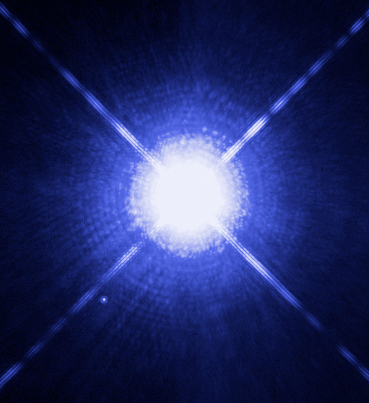
NASA, ESA, H. Bond (STScI), and M. Barstow (University of Leicester) · Source ↗ · CC BY 3.0

Different physical objects
Stars produce energy through processes including nuclear fusion. Our Sun is a star. The eight planets of our Solar System orbit the Sun and are seen mainly by reflected sunlight. A bright planet can look like a star to unaided eyes; apparent brightness alone is not a reliable classification.
Watch changes against the background
Planets change position against the background stars over time. The entire local sky also appears to move during a night because Earth rotates. These are different effects. Keep the same observer and compare selected dates in simulation to investigate a planet's changing position without confusing it with the daily turning of the sky.
Read the object type
Yorungez labels object types in search and detail panels. Names and catalogue identifiers help distinguish a physical object from a constellation pattern. The map uses calculated coordinates for the selected observer and time; catalogue epoch coordinates are a reference, not an instruction to point directly at those angles today.
Sources & further reading
These sources explain the scientific background. See the project page for Yorungez’s calculation and rendering limits. Science & project ↗