
Moon
Moon phases: why the Moon changes shape
Understand the illuminated Moon, the terminator and the difference between a phase and an eclipse.
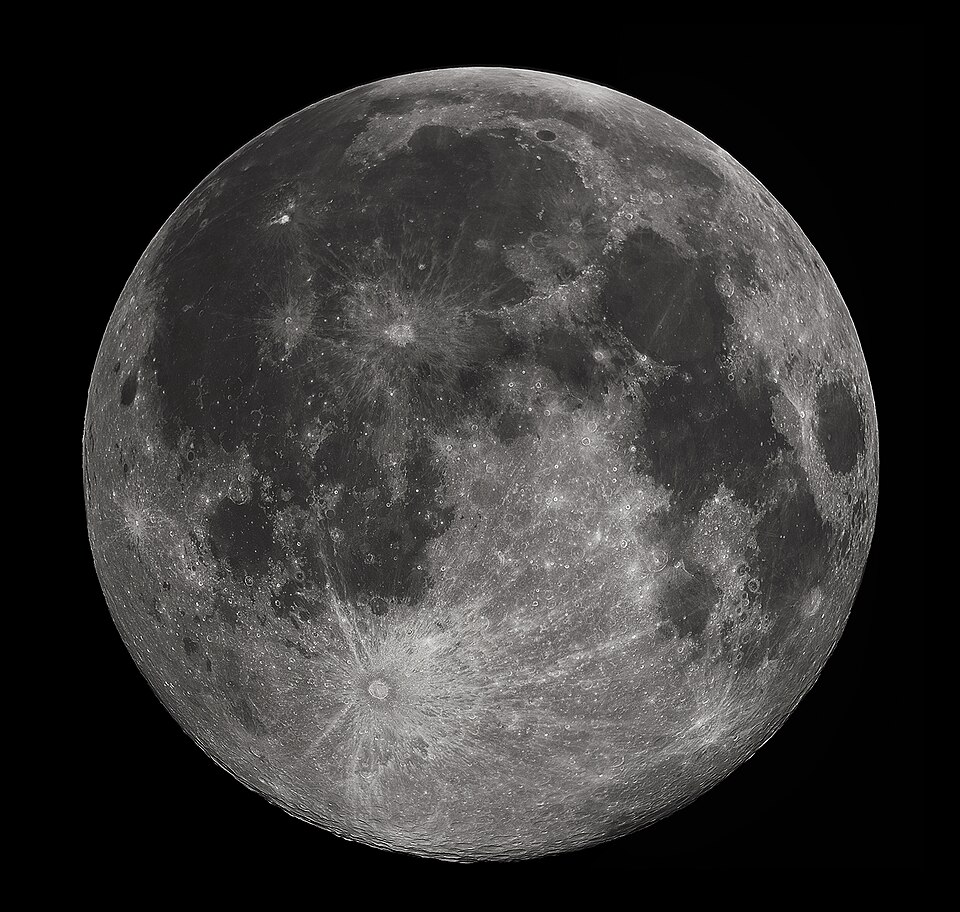
Gregory H. Revera · Source ↗ · CC BY-SA 3.0

Sunlight and viewing geometry
The Sun illuminates roughly half of the Moon. As the Moon orbits Earth, we see a changing fraction of that lit hemisphere. The usual sequence runs from new Moon through crescent and quarter phases to full Moon, then back again. A normal phase is not Earth's shadow falling on the Moon; that is a lunar eclipse.
Choosing an observing experience
The boundary between lunar day and night is called the terminator. Oblique sunlight near it can make surface relief easier to notice. A full Moon gives a bright, familiar disc but a different pattern of shadows. Binoculars can reveal more detail than unaided eyes, although image steadiness and conditions affect what you see.
Use the phase and the local sky together
A phase event has a shared UTC instant, but that instant may occur when the Moon is below your horizon. Use Calendar to understand the phase, then Tonight and the map to choose a local observing time. Yorungez's lunar image is an illustration with computed illumination, not a live camera photograph.
Sources & further reading
These sources explain the scientific background. See the project page for Yorungez’s calculation and rendering limits. Science & project ↗