
Planets
How to find Jupiter from your location
Plan the direction and time before looking for the largest planet in our Solar System.
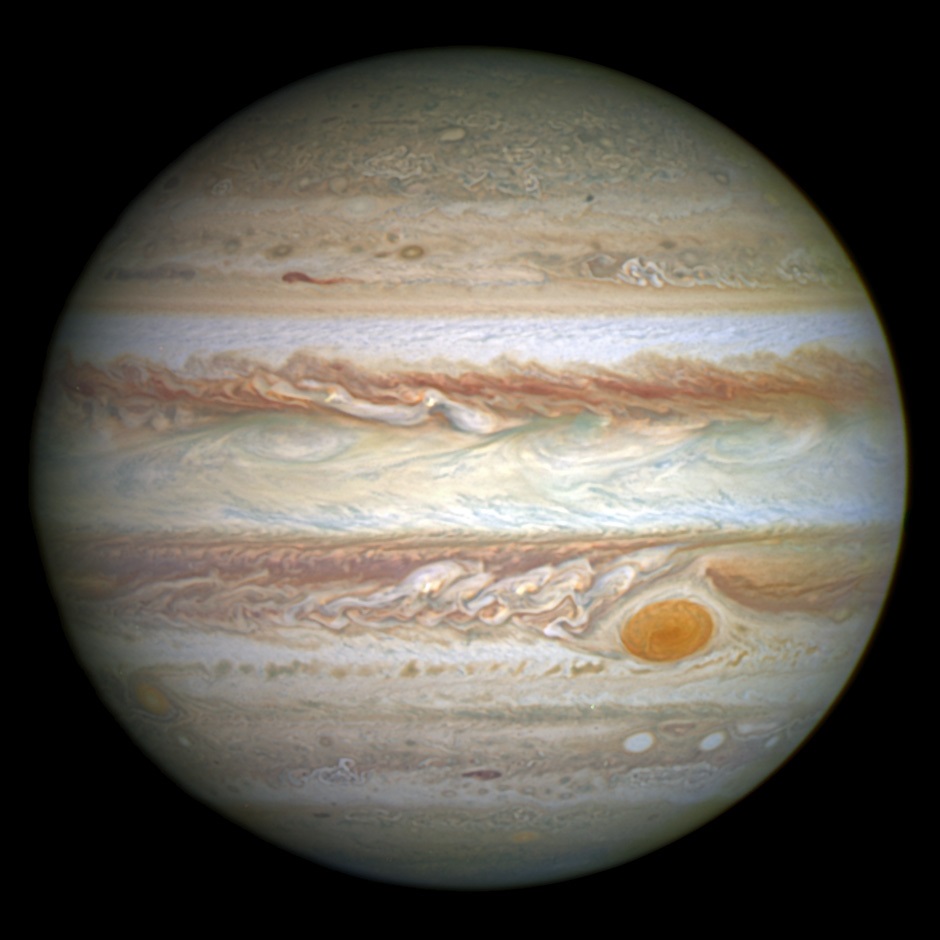
NASA, ESA, and A. Simon (Goddard Space Flight Center) · Source ↗ · Public domain


Start with place and time
Jupiter is the fifth planet from the Sun and the largest planet in our Solar System. Its direction in your sky changes as Earth rotates and both planets move. There is no permanent answer such as 'always look south'. Set your actual observing position and live time, search for Jupiter and read its azimuth and altitude.
Choose a useful window
Tonight shows calculated above-horizon intervals. A target can still be difficult to detect near the horizon or in bright twilight. Inspect the real sky for clouds and obstructions. A time with a higher target and darker sky may be a better starting point, but Yorungez does not measure your seeing or transparency.
From map to binoculars
Identify the direction with your eyes first, then use steady binoculars if available. What appears as a large textured planet in the app is illustrative enlargement, not the angular size you should expect through binoculars. Never point binoculars or a telescope at the Sun without appropriate specialist solar equipment and guidance.
Sources & further reading
These sources explain the scientific background. See the project page for Yorungez’s calculation and rendering limits. Science & project ↗